What to Expect During Deadbolt Installation Atlanta

Same-day deadbolt installation across Greater Atlanta, dispatched from Dunwoody 30338. Call (678) 338-8566 to get started.

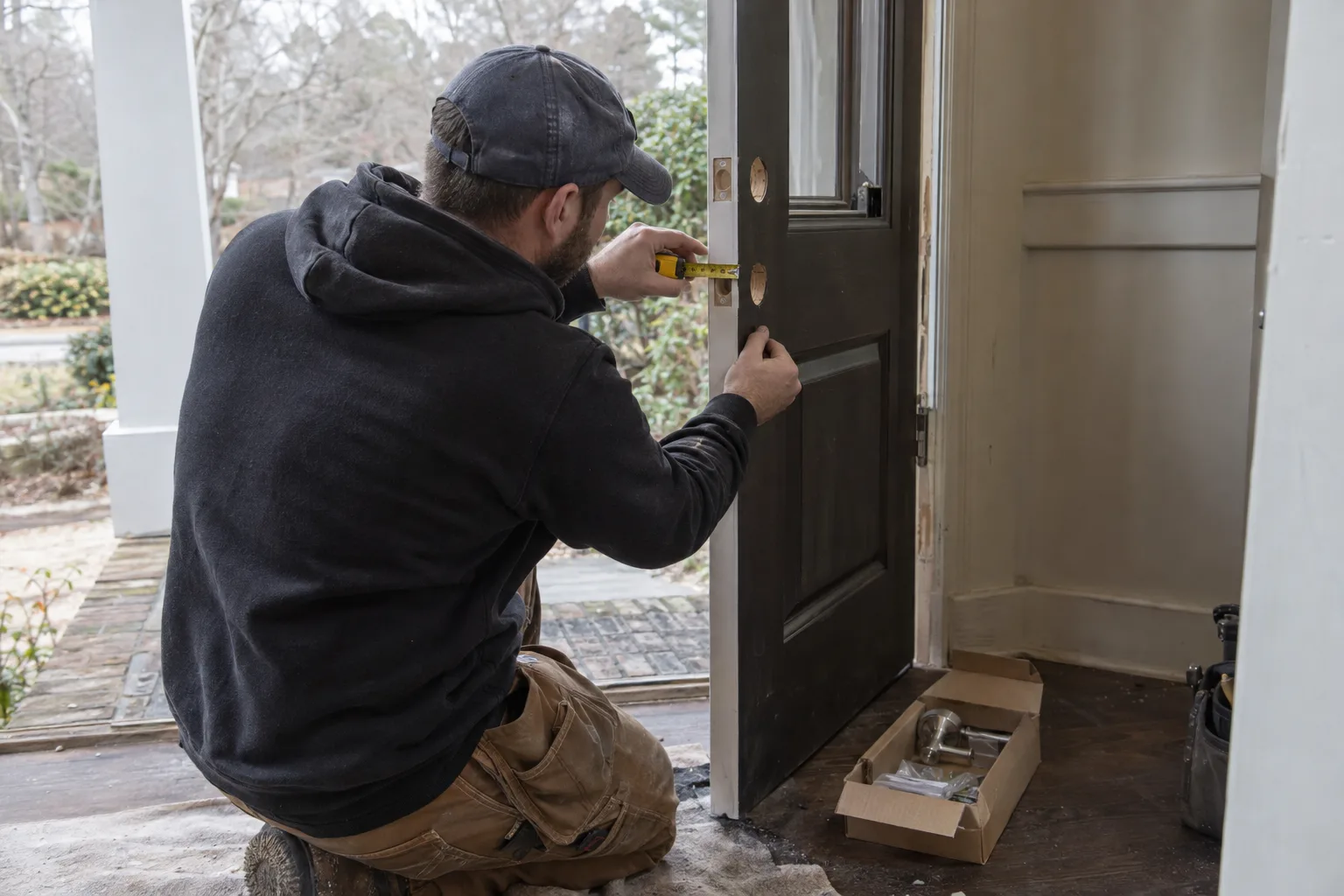
Locksmith installing a deadbolt on an exterior door in an Atlanta home, measuring the backset before drilling
24/7 emergency service Dispatched from Dunwoody YES Greater Atlanta area
Showing the correctly installed strike plate with the bolt seated in it illustrates the finished result of the key step
Need a deadbolt installed today? (678) 338-8566

Deadbolt installation jobs we handle

Most calls are one of four situations: a door with no deadbolt yet, a worn-out deadbolt that needs replacing, a slab door that needs holes drilled, or a misaligned bolt that won't throw cleanly. Tell us which one you have when you call.

Learn more about emergency locksmith Greater Atlanta

Replacing an old deadbolt

Existing holes are cleaned up, the new bolt is confirmed to fit the same backset, and the strike plate is checked for a solid catch before the job is done.

Deadbolt replacement

Blank slab door

No holes in the door at all. We bore the cross hole (typically 2-1/8 inches) and the edge hole (1 inch) to the deadbolt manufacturer's template before anything is fitted.

Slab door boring

Bolt won't throw or catch

A deadbolt that sticks or won't reach the strike plate is usually a frame alignment issue. The strike plate position and the door gap are checked and corrected.

Alignment fix

Door types we install deadbolts on

Deadbolts are built around specific door thicknesses, backsets, and frame conditions. Letting us know your door type before we arrive means we show up with the right hardware.

  • Exterior entry doors
  • Steel doors
  • Solid wood doors
  • Fiberglass doors

How deadbolt installation works, step by step

  1. Assessment

    Call (678) 338-8566. On arrival, the installer checks the door thickness, the backset distance, the frame gap, and whether existing holes need cleaning up or new bores are needed.

  2. Drilling or prep

    For a door with no holes, a hole saw cuts the cross bore to spec (usually 2-1/8 inches), then a spade bit opens the edge bore (usually 1 inch). Pre-drilled doors skip this step.

  3. Fitting the deadbolt

    The latch bolt is seated flush in the edge bore, the cylinder and thumb-turn are set in the cross bore, and all fasteners are tightened. The bolt throw is confirmed to extend the full inch.

  4. Strike plate and frame

    The strike plate is mortised into the door frame at the right height. For solid security, the strike plate screws should reach the stud behind the frame, not just the jamb wood.

Deadbolt installation Atlanta FAQ

What actually happens during a deadbolt installation in Atlanta?

The installer measures first, then drills only what the door needs. On a door with no existing holes, two bores are cut: the cross bore (the large round hole through the face of the door, typically 2-1/8 inches) and the edge bore (the smaller hole in the door's edge, typically 1 inch). The deadbolt body goes into the cross bore, the latch bolt seats in the edge bore, and the strike plate is mortised into the door frame. The job ends with the bolt thrown and retracted several times from both sides using the key and the thumb-turn. Per the American National Standards Institute (ANSI), deadbolts are graded 1 through 3, with Grade 1 being the strongest for residential use.
How long does deadbolt installation take?

Time depends on what the door already has. A pre-drilled door where you're just swapping one deadbolt for another goes faster than a blank slab that needs holes bored from scratch. Frame alignment issues add time too - if the door has settled or the frame is slightly out of square, the strike plate position has to be worked out before the bolt will throw cleanly. We dispatch from Dunwoody and offer same-day service across Greater Atlanta. Call (678) 338-8566 and describe your door so we can give you a realistic picture before we arrive.

Does the strike plate matter as much as the deadbolt itself?

Yes - a weak strike plate makes a strong deadbolt much less effective. The strike plate is the metal plate on the door frame that the bolt slides into. If it's fastened only to the door jamb with short screws, a hard kick can split the jamb. Longer screws - typically 3 inches - that reach past the jamb into the structural stud behind it make a significant difference. The door security guidance from state security agencies and organizations like the security advisory bodies consistently point to the door frame and strike plate as the weak point, not the lock cylinder itself. We check and address this on every installation.

24/7 emergency locksmith

1340 Center Dr. Dunwoody, GA 30338

Call now for service